
Manasi Way

Couples and family therapy

When the same argument runs in circles, when silence has become the main language, when trust is broken — a third person in the room changes what the two of you can hear. You can come together, or start alone.

  • together or one of you
  • no taking sides
  • confidential

up to 120 minutes — 135 € · you can start alone

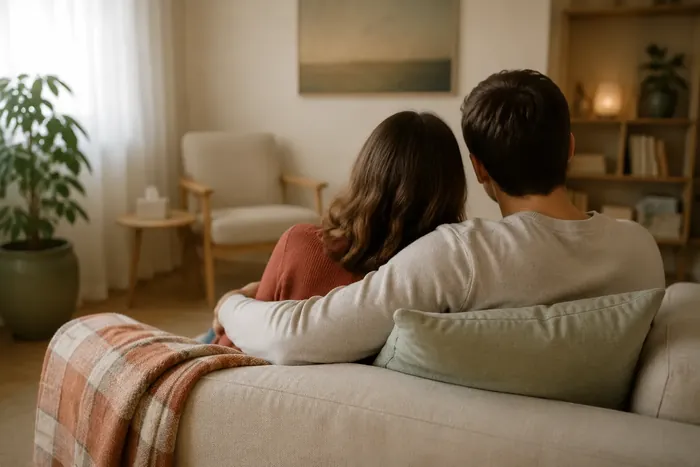
A couple sitting with a psychologist during a family session

What couples bring

  • “We argue about the same thing again and can't stop”
  • “We live side by side, but we've almost stopped being close”
  • “Since the baby we've become parents and not a couple”
  • “After trust was broken we don't know whether we can move on”
  • “We see parenting differently, and the child ends up between us”
  • “Money and housework turn into a conflict every time”
More situations (4)
  • “It's hard for us to talk about intimacy without hurt and defence”
  • “Relatives interfere, and we can't set boundaries together”
  • “We're thinking about divorce and want to decide without a war”
  • “One of us wants to save the relationship, the other isn't sure yet”
Two people's hands next to each other on a table

If you recognise your situation, you don't have to choose a method in advance. Write in your first message what is going on — I'll tell you whether I work with a request like that.

How the first session goes

We collect both pictures

Each of you gets time to describe the situation without being interrupted and without looking for someone to blame. I ask about the history of the conflict, about expectations, and about the limits that keep the conversation safe.
We find the shared task

If a shared goal is possible, we put it in concrete terms — for example, learning to discuss money without attacking each other. If your goals differ, we work first on making the decision clear.

We build a new experience of talking

In the session we practise saying feelings and needs more precisely, and hearing what the other one answers. Then we check what of that carries over into ordinary days.

How the work with a couple is built

I'm not a judge and not a lawyer

My work is not to decide who is right, but to show the cycle the two of you are stuck in. If one of you feels I'm taking the other one's side, say so straight away — that matters more than any topic of the session.

Both of you speak — in turn, without interruption

In the session each of you gets to tell your version to the end. Often it is the first conversation in a long time where nobody is defending themselves — and that alone changes a lot.

Joint and one-on-one meetings

Sometimes it helps to talk with each partner one-on-one — only by agreement with both. What is said one-on-one stays between us until the person chooses to bring it into the shared conversation.

Small agreements between sessions

Not homework for the sake of ticking a box, but one concrete experience: ten minutes of talking a day with no phones and no household logistics. At the next session we look at how it went.

Session length and price

FormatLengthPrice
Couples or family sessionup to 120 minutes135 €

For a first couples session I set aside up to 120 minutes: enough time to hear both of you and agree on a focus. Online or in person in Almaty.

When another format fits better

  • If one partner came under pressure and is not ready for any dialogue — we start with an individual session with the one who is.
  • Where there is active violence, threats or tight control, couples work is not safe — specialist support comes first.
  • I do not decide who is right and who is wrong, and I do not make decisions for a couple — I help you hear each other and choose for yourselves.

Before you book

A short set of rules the work is built on. They are the same for every format and do not change from session to session.

  • Sessions are confidential: what is said in them is not discussed with anyone. The exceptions are a direct threat to life — yours or someone else's — and cases directly provided for by law; I explain these limits at the first meeting.
  • I am a psychologist, not a doctor: I do not make medical diagnoses and do not prescribe medication. If I see that you need a doctor, I say so plainly and help you find your bearings.
  • The work rests on accuracy: when you tell me about your health and any medication you take, say it as it is. Withholding something important puts you at risk and is a reason to stop the work.
  • Come to the session sober. If a person arrives intoxicated, the session does not take place and the payment for that day is not returned.
  • If you feel very bad right now and are having thoughts of harming yourself, don't wait for an appointment: call your local emergency number. In Kazakhstan that is 112 or 103 — free, around the clock; across the EU, 112 works in every country.
A couple during a session with a psychologist

Frequently asked questions

Can I come without my partner?

Yes. An individual session helps you understand your part of the situation, your limits and your possible steps. What you cannot do is change another person's decisions without them taking part.

Will you take someone's side?

I don't act as a judge and I don't hand out blame. My task is to hold the structure of the conversation, notice the repeating cycle and help both of you speak more precisely.

What if we're thinking about divorce?

Keeping the couple together at any cost is not automatically the goal. The work can help make the decision clear and make the conversation more respectful — especially when there are children.

How do I persuade my partner to come?

Persuading against someone's will is a poor start: pressure breeds sabotage. Honest wording works: “this is hard for me, I want to try once — just look at the format”. If your partner isn't ready even for that, start with an individual session.

Why does a couples session last up to two hours?

Each of you needs room to speak and be heard, and the couple needs time to see its own cycle and try talking differently. A first couples session needs time to hear you both and to see the cycle — that is why it runs up to 120 minutes.

Do you talk to each of us one-on-one?

Yes, by agreement with both of you. What is said in a one-to-one meeting stays there until the person decides to bring it into the shared conversation.

Payment and rescheduling

Online sessions are prepaid in full at booking. Free rescheduling up to 24 hours ahead.

Start with a conversation that isn't about blame

If you keep going in circles, a first session helps you see the cycle of the conflict itself. You can book together, or come alone to work out what format fits next.

  • we agree a time that fits you
  • a consultation does not replace medical care
  • confidential
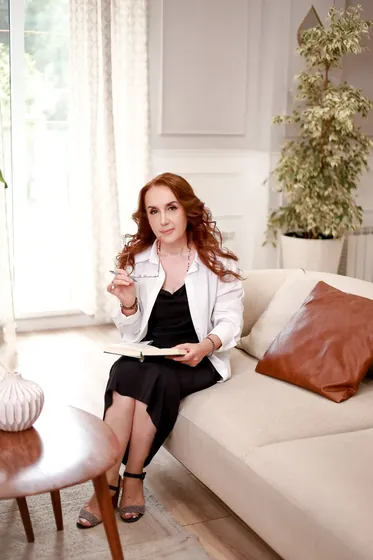
Lyudmila Chernysheva in the room where family sessions take place