Seeing a psychologist alone or together: how to decide
“My partner won’t come” is a common reason a couple never comes at all[1]. The good news: it is not a dead end. Let’s look at when it makes sense to come as a couple, when to come alone — and why starting alone is better than not starting.
- Lyudmila Chernysheva, psychologist and hypnotherapist
- Updated: September 27, 2026
Together
When the problem itself lives between the two of you: a recurring cycle of arguments, distance, a crisis of trust, a decision about the future. With me in the room, you both agree on rules for the conversation, and a third person makes possible what kept breaking down when it was just the two of you: to hear without interrupting, and to speak without attacking[2]. A first couples session runs up to 120 minutes — so that both of you are heard.
The exception is violence, threats or coercive control: then joint couples sessions are not safe, and you start with separate support. If you are in danger right now, call 112 in Kazakhstan or your local emergency number elsewhere; 111 is Kazakhstan’s free, round-the-clock helpline on family matters and the rights of women and children.
Alone
When the more pressing task is to work through your own part in it: why you choose relationships like this, why you keep quiet about the things that matter, what this distance is doing to you. In my experience, one person’s work changes the couple as well: you respond differently, and the familiar script finds nothing to hold on to. This is no half-measure; it is a path in its own right — with one caveat: the psychologist hears only one side, and we keep that in mind so that the sessions don’t turn into “analysing the partner”[1].
If your partner says no
Don’t drag them along: in my experience, a person who is made to come to a session doesn’t do the work — they just sit it out. It is more honest to say: “I’m going to work on my own part; join me when you want to.” Sometimes your partner comes along later of their own accord, once they see a change. Sometimes not — and then you still have your own work and your own footing.
The climate of the whole family
The adults’ relationship is the environment children and teenagers live in. How parents express and resolve conflict is linked to children’s emotional and behavioural wellbeing, both while the adults are together and once they no longer are. Working on the relationship is not a luxury for the couple but the climate of the whole family[3].
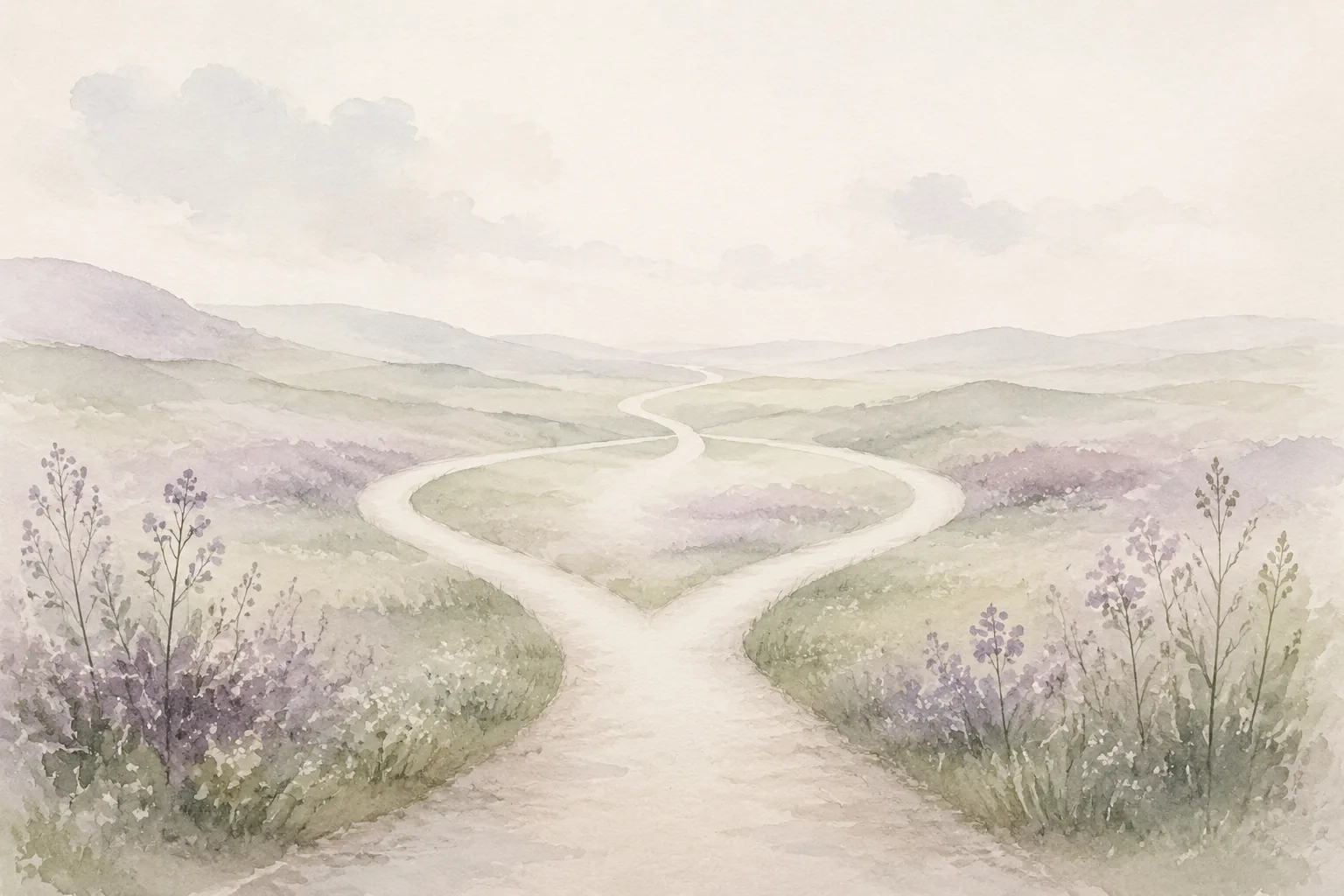
If you don’t know where to start, don’t choose
The booking page has an option called “Not sure which format fits”: describe the situation briefly, and I’ll suggest which session to start with.
Sources
- Gurman A. S., Burton M. (2014). Individual Therapy for Couple Problems: Perspectives and Pitfalls. Journal of Marital and Family Therapy, 40(4), 470–483, DOI 10.1111/
jmft.12061 - Roddy M. K., Walsh L. M., Rothman K., Hatch S. G., Doss B. D. (2020). Meta-analysis of couple therapy: Effects across outcomes, designs, timeframes, and other moderators. Journal of Consulting and Clinical Psychology, 88(7), 583–596, DOI 10.1037/
ccp0000514 - Harold G. T., Sellers R. (2018). Annual Research Review: Interparental conflict and youth psychopathology: an evidence review and practice focused update. Journal of Child Psychology and Psychiatry, 59(4), 374–402, DOI 10.1111/
jcpp.12893
The limits of this article
This article is for information only: it does not replace a consultation or a doctor's help.
If you feel very bad right now — in Kazakhstan call 112 or 103; free round-the-clock psychological help — 1303 (Almaty).
If conversations keep going round in the same circle — in a session we can go through one recent episode, without looking for who is to blame.
See also
- The “Do you hear each other” testa checklist for couples
- Couples therapyhow work with a couple goes
- Individual therapyhow one-to-one work goes
- Bookingincluding “Not sure which format fits”
- Why couples argue in circlesA repeating argument has a script, and the script is stronger than any trigger.
- Silence in a coupleTwo kinds of silence look alike from the outside; from the inside there is no mistaking them. Three questions to tell them apart.