Bedtime anxiety: why your mind switches on when the light goes out
During the day you are busy, and there is no room for anxiety to take hold. In the evening the day’s work is done, the light goes out, and the mind, left with nothing to do, opens its archive: conversations left unfinished, tomorrow’s risks, mistakes from five years ago. Sound familiar? Often this is anxiety that has been queuing all day and only gets a hearing once everything goes quiet. But the same picture can also come with insomnia, which is a condition in its own right. If your sleep has not settled for weeks, that is a conversation to have with a doctor or with a specialist in cognitive behavioural therapy for insomnia (CBT-I): the American Academy of Sleep Medicine guideline strongly recommends it for chronic insomnia[1].
- Lyudmila Chernysheva, psychologist and hypnotherapist
- Updated: September 28, 2026
Why at night, of all times
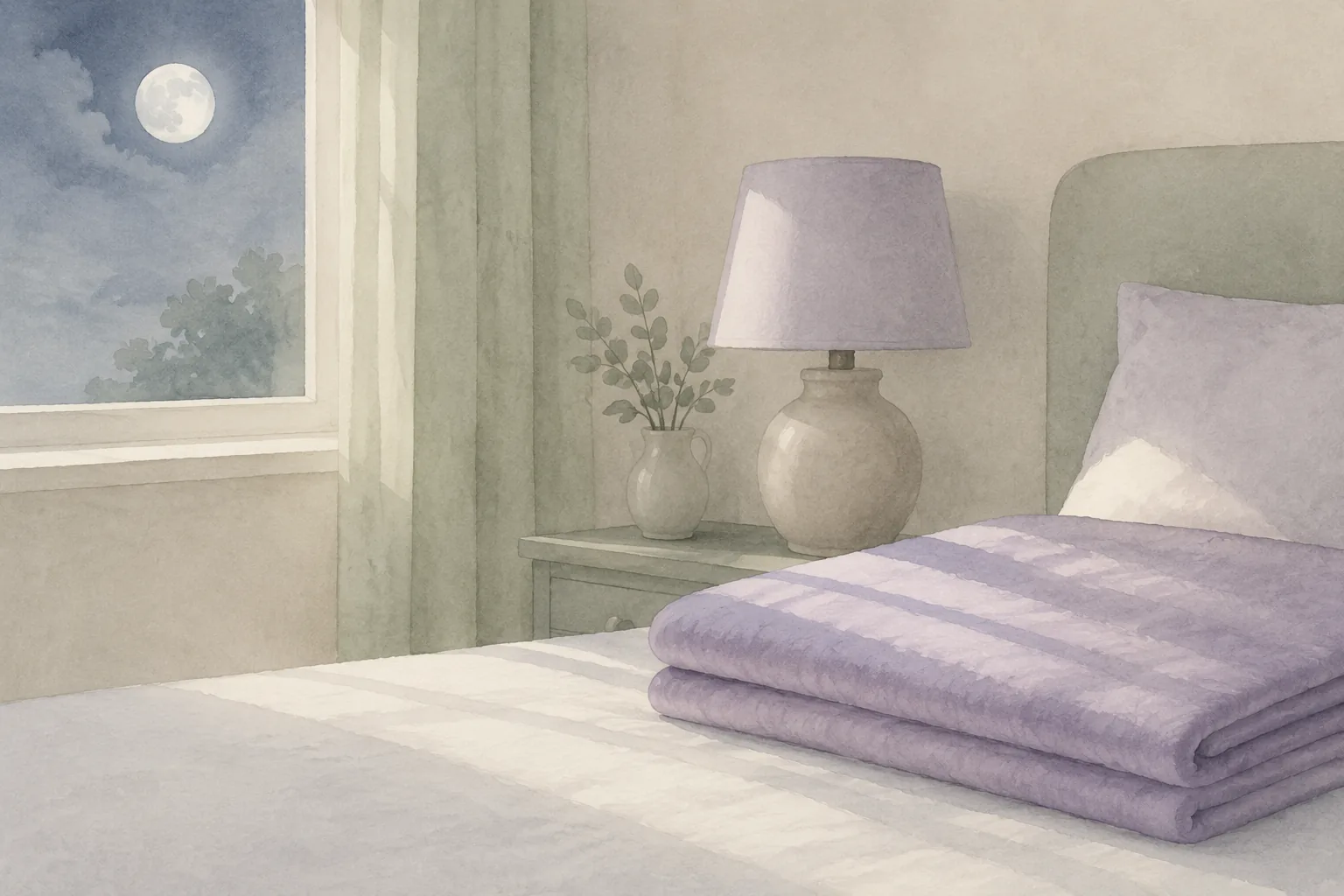
Darkness and silence strip away outside stimuli, and the signals from inside grow louder. Tiredness makes it harder to brush thoughts aside. And for many people the bed has long since become the place where anxiety does its work: if evening after evening you lie there going over the same thoughts, the brain dutifully learns the link “bed = a place for worrying”[1].
What the research says
Disturbed sleep and anxiety feed each other[2]: lack of sleep makes the nervous system more reactive, and that reactivity gets in the way of sleep. The psychological approaches to anxiety that NICE describes as effective[3] also improve sleep[4], although some of the difficulties with sleep may remain and need work of their own.
What you can change this week
Give anxiety an appointment: 15 minutes in the evening, a couple of hours before bed, with pen and paper. Write out everything that is going round in your head, and next to each item note when you will come back to it. In my experience, what has been written down is easier to let go of. Put screens away an hour before bed: your feeds and the news are fuel for anxiety. The bed is for sleep only: if you have not fallen asleep within twenty minutes, get up, sit in dim light with a boring book, and come back when you are sleepy[1]. The long out-breath works lying down too.
When it is time to get help
If these rituals have not helped after a month or more, if the morning begins with anxiety, if your sleep has fallen apart in the wake of events you cannot put behind you — that is something to bring to a specialist. If you snore with pauses in your breathing, or feel very sleepy during the day, see a doctor first.
You can check what is happening with your sleep using the “Sleep quality” test; the gentle audio practice “Calm sleep” helps you build an evening ritual.
Sources
- Edinger J. D., Arnedt J. T., Bertisch S. M., et al. (2021). Behavioral and psychological treatments for chronic insomnia disorder in adults: an American Academy of Sleep Medicine clinical practice guideline. Journal of Clinical Sleep Medicine, DOI 10.5664/
jcsm.8986 - Alvaro P. K., Roberts R. M., Harris J. K. (2013). A Systematic Review Assessing Bidirectionality between Sleep Disturbances, Anxiety, and Depression. Sleep, DOI 10.5665/
sleep.2810 - National Institute for Health and Care Excellence (NICE) (2011). Generalised anxiety disorder and panic disorder in adults: management (Clinical guideline CG113). NICE, URL www.nice.org.uk/
guidance/ cg113 - Ramsawh H. J., Bomyea J., Stein M. B., Cissell S. H., Lang A. J. (2016). Sleep Quality Improvement During Cognitive Behavioral Therapy for Anxiety Disorders. Behavioral Sleep Medicine, DOI 10.1080/
15402002.2014.981819
The limits of this article
This article is for information only: it does not replace a consultation or a doctor's help.
If you feel very bad right now — in Kazakhstan call 112 or 103; free round-the-clock psychological help — 1303 (Almaty).
If anxiety is already getting in the way of sleep, daily tasks or decisions — in a consultation we can go through your own cycle of anxiety and find a first step that gives back a little control.
See also
- Sleep quality testa self-observation checklist
- Individual therapyhow one-to-one work goes
- Hypno-meditation “Calm sleep”a 35-minute evening ritual
- Bookingchoose a format and book
- RuminationHow replaying differs from thinking things through, and how to step out of the loop.
- Anxiety: where normal endsWhere a normal reaction ends and something worth looking into begins.